
Continuous Annealing
Multi-zone open-fire or premix furnaces for low, medium and high carbon steel wire requiring controlled heating and cooling.
Continuous and batch thermal-processing systems for steel wire and selected non-ferrous applications, engineered around metallurgy, thermal cycle, atmosphere, wire speed, energy efficiency and downstream process requirements.
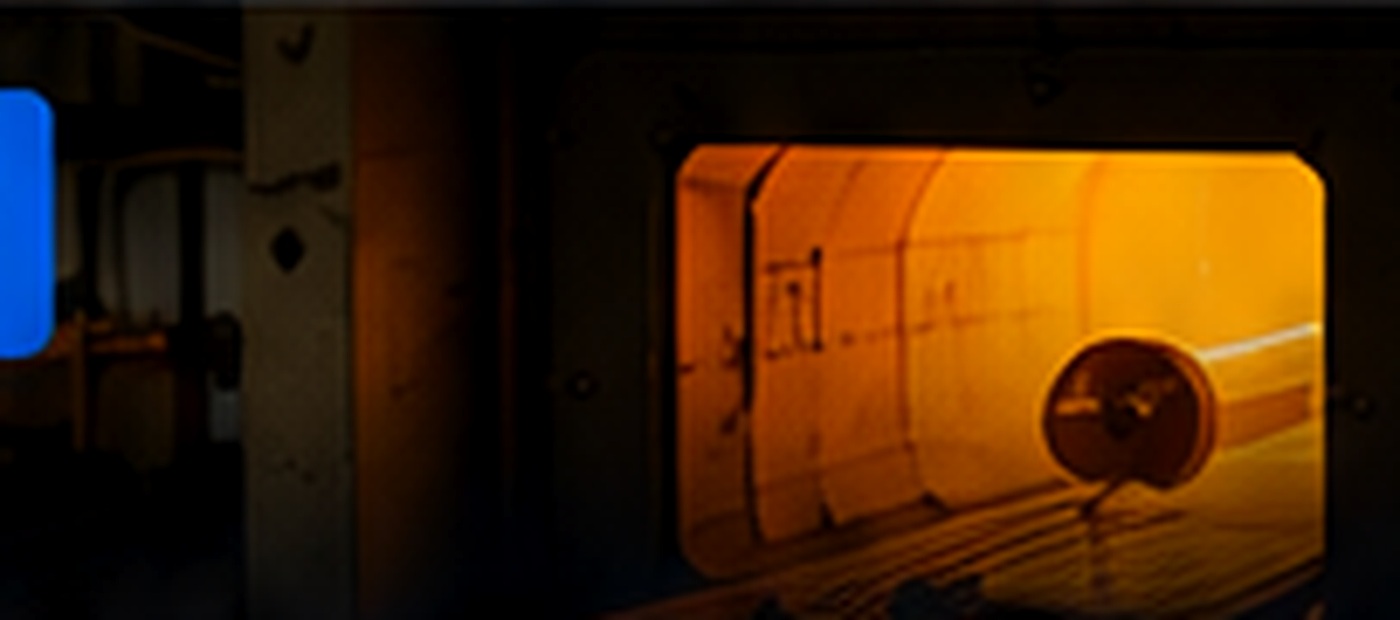
The required microstructure, surface condition, production rate and downstream operation determine the heating and cooling route.
Multi-zone open-fire or premix furnaces for low, medium and high carbon steel wire requiring controlled heating and cooling.
Austenitizing and controlled quenching systems designed to develop a fine pearlitic structure suitable for subsequent high-reduction drawing.
Project-specific hardening and tempering lines for spring-wire and specialty high-carbon applications.
Batch annealing, recrystallization and spheroidizing systems for coils and wire packages.
Heavy-duty batch heat-treatment systems for selected load sizes, product geometries and controlled-atmosphere cycles.
Special high-speed electrical annealing systems can be engineered for selected copper, aluminium and alloy-wire applications.
Combustion and furnace geometry are optimized around heat transfer, temperature uniformity, turndown, scale formation and process stability.
Direct-fired multi-zone furnace architecture for robust continuous steel-wire annealing and austenitizing.
Premixed combustion systems for high thermal uniformity, controlled excess air and stable zone control across a broad production window.
Burner and gas-flow architecture can be arranged to improve convective heat transfer and temperature equalization along the wire path.
Indirect-heating or protected-atmosphere sections can be considered where surface chemistry or atmosphere isolation is critical.
Fluid-bed heating or quenching can be evaluated for applications requiring very high heat-transfer coefficients and compact thermal sections.
Recuperative combustion-air preheating and exhaust-energy recovery can be integrated to reduce specific fuel consumption.
Installed power and furnace length are calculated from wire mass flow, target temperature, residence time, radiation/convection transfer, atmosphere and system losses.
| Wire materials | Low / medium / high carbon steel; selected stainless, copper, aluminium and alloy applications by project |
|---|---|
| Heating energy | Natural gas / LPG / electric / hybrid according to process |
| Combustion systems | Open-fire, premix and application-specific indirect-heating arrangements |
| Temperature zoning | Multi-zone closed-loop control with recipe-based setpoints |
| Atmosphere | Air, controlled-combustion atmosphere, nitrogen or project-specific protective / reducing atmosphere |
| Cooling | Air, water, fluid bed, oil or project-specific controlled quench |
| Heat recovery | Recuperative combustion air and process heat-recovery options |
| Automation | PLC/HMI, burner management, temperature logging, recipe control and diagnostics |
The patenting line is treated as one metallurgical route: furnace, quench, descaling and surface preparation are engineered together.
The quench must provide the cooling rate and holding behavior required to obtain the target pearlitic structure without compromising surface quality or operating safety.
Conventional high-performance patenting route where metallurgical uniformity and precise isothermal treatment are priorities.
Alternative high-heat-transfer system that can eliminate molten lead for suitable product and metallurgy windows.
Controlled aqueous quenching can be engineered where the product allows a non-lead patenting route.
Forced circulation and heat removal stabilize the quench medium across the full wire field.
Process temperatures, medium condition and cooling duty can be continuously monitored and recorded.
Lead-free routes can be evaluated during project engineering where environmental or regulatory requirements justify the process change.
Oil-tempering lines can be configured for specialty wire products requiring controlled austenitizing, quenching and tempering.
Batch systems are designed for annealing, recrystallization and spheroidizing where long controlled cycles and uniform load temperature are required.
Suitable for controlled-atmosphere treatment of wire coils and packages with heating, soak and controlled cooling cycles.
Long controlled cycles for cold-heading-quality and specialty wire.
Restoration of ductility after cold working.
Nitrogen or project-specific atmosphere systems can be integrated.
| Batch size | Project-specific; scalable from small batches to heavy industrial loads |
|---|---|
| Heating | Natural gas / LPG / electric |
| Atmosphere | N₂ or project-specific protective / reducing atmosphere |
| Cycle control | Programmable heating, soak and cooling recipes |
| Temperature uniformity | Circulation and load arrangement engineered from batch geometry |
| Cooling | Natural, forced-gas or external cooling system according to cycle target |
| Data logging | Batch recipe, temperature history, alarms and traceability |
For selected non-ferrous wire applications, Joule-effect resistance annealing can provide compact high-speed thermal treatment directly integrated with drawing equipment.
Current is automatically coordinated with wire diameter and line speed to maintain the required annealing energy over changing production conditions.
| Process principle | Direct electrical / Joule-effect resistance heating |
|---|---|
| Typical materials | Copper, aluminium and selected alloys |
| Configuration | Single or twin wire; special multi-wire concepts by project |
| Cooling | Controlled spray / immersion cooling and thermoregulated circulation |
| Atmosphere / drying | Nitrogen, steam and drying channels can be integrated according to product |
| Control | Automatic annealing-current adjustment versus diameter and speed |
Energy reduction is addressed at burner, furnace, exhaust, cooling and production-control level rather than through one component alone.
Optimized air/fuel mixing and controlled excess air support stable, efficient combustion.
Exhaust energy can be recovered directly into combustion air where burner and furnace architecture permit.
Refractory and insulation systems are selected to reduce shell loss and stored-energy penalties.
Burner and control architecture can be sized for stable operation across a broad throughput range.
Exhaust heat can be used for combustion-air preheating, process drying or other suitable plant consumers.
Specific energy, temperatures and production data can be logged for optimization and maintenance analysis.
Combustion safety, atmosphere safety and process control are engineered as part of the furnace—not added after mechanical design.
| Burner management | Automatic purge, ignition, flame supervision and fuel shut-off sequencing |
|---|---|
| Gas train | Pressure regulation, min/max pressure supervision, safety shut-off valves and leak-test provisions as required |
| Temperature control | Multi-zone closed-loop control with thermocouple supervision and recipe management |
| Atmosphere safety | Flow, pressure and oxygen / process-gas monitoring according to atmosphere type |
| PLC/HMI | Siemens, Schneider Electric, Mitsubishi or customer-specified industrial automation |
| Compliance | CE / destination-market safety engineering, with applicable combustion, electrical and machine-safety standards |
We will calculate the heat balance, furnace length, installed power, zone architecture, atmosphere, quench duty and cooling system.